

 Wildfire
Zeeland has many natural areas with dunes, forests, heathland and grassland. This nature is beautiful but also vulnerable. Especially in spring and summer, the risk of wildfire increases. A wildfire can spread quickly and unpredictably and may start in several places at once, making it difficult to control.
Besides the loss of valuable nature, a wildfire also poses a risk to people and animals. The greatest danger for you as a visitor or resident is being caught by surprise, becoming trapped and unable to escape. Below you will find the most frequently asked questions and answers about wildfires to help you prepare.
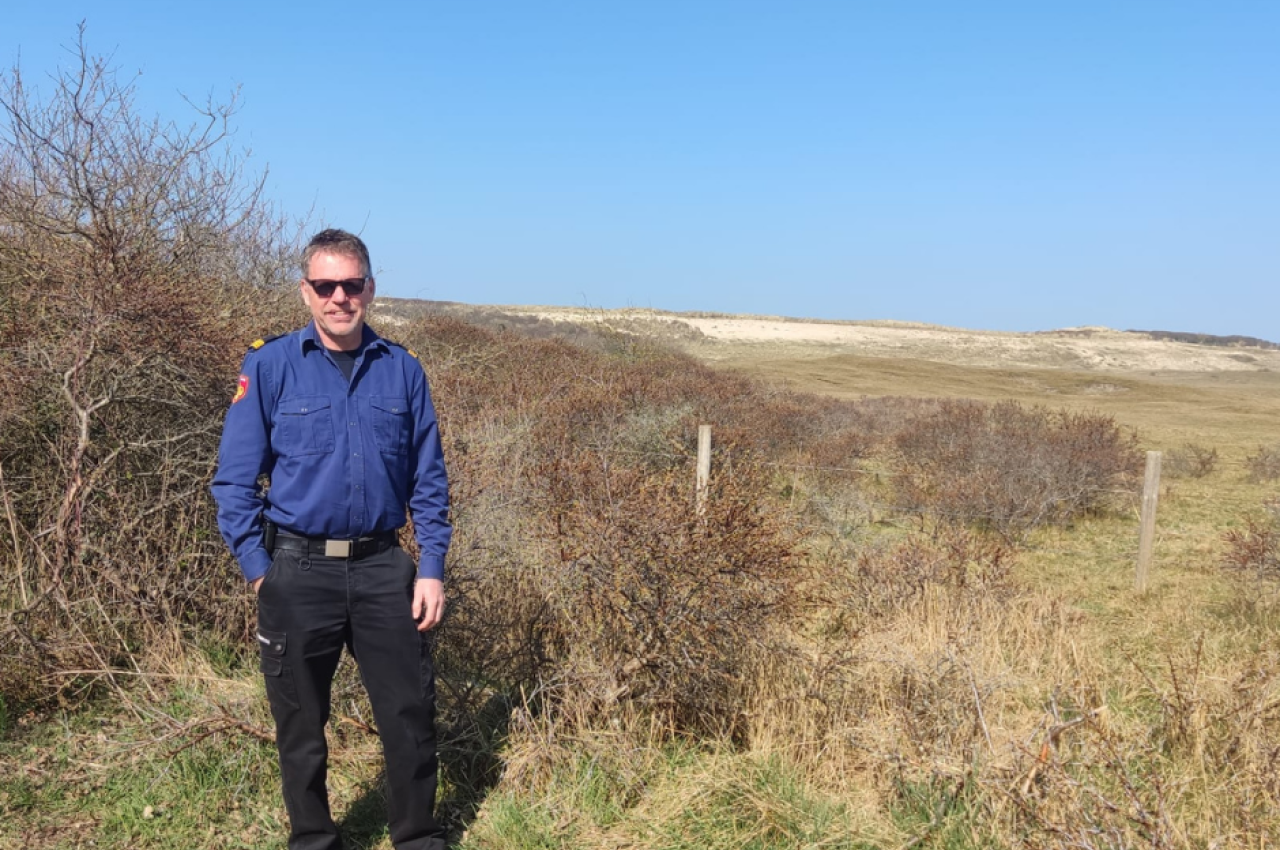
Robert Maranus - Wildfire Specialist
Did you know that 70% of wildfires are caused by humans? Often accidentally. When there is an increased risk, it is good to be extra alert about what you are doing.
What is the risk of wildfire in Zeeland?
Most wildfires are caused by human behaviour, such as careless use of fire (barbecues, fire pits or discarded cigarettes). Sometimes fires are deliberately started. In rare cases, wildfires are caused by natural events such as lightning strikes.
The risk of wildfire increases due to a combination of factors:
- the season (especially spring and summer);
- the type of vegetation, such as heathland, sea buckthorn and coniferous forest;
- the number of people in natural areas, such as hikers and campers;
- weather conditions such as drought and wind.
Some areas in Zeeland are particularly vulnerable to wildfires, including:
- Kop van Schouwen;
- De Schotsman;
- Manteling van Walcheren;
- Axelsche Bos;
- the Sint Jansteen water extraction area.
How is wildfire risk monitored in Zeeland?
Zeeland has a monitoring station located in the dunes near Burgh-Haamstede. This station measures the dryness of the natural environment. This measurement is called the drought index. Based on this index, the fire service determines which additional measures are needed in the event of a wildfire.
The station is linked to www.natuurbrandrisico.nl, where two phases are used:
- Phase 1: normal risk
- Phase 2: extra alert
Each phase includes specific advice and measures. On this hazard page, you can read what these phases mean.
What do phase 1 and phase 2 mean for you?
Phase 1 – normal risk
- Keep firefighting equipment available.
- Do not throw cigarettes, glass or waste into nature.
- Do not park your car on tall, dry grass.
- Be aware that mobile phone coverage may be limited.
- Stay alert to suspicious situations and report them via 112 or to the landowner.
Phase 2 – extra alert
- Open fires are not allowed in natural areas, including fire pits, torches, sky lanterns and fireworks.
- Cooking on open fire using solid fuels such as wood or charcoal is not allowed.
- Any exemptions from fire bans are usually no longer valid.
- Be extra alert and report suspicious situations.
- Keep firefighting equipment available.
- Take a map, GPS or hiking app when visiting nature.
How can you prevent a wildfire?
Wildfires can often be prevented. Your behaviour can significantly reduce the risk.
- Do not smoke in nature, especially during dry conditions.
- Do not light open fires during dry periods.
- Always be careful with open fire. Barbecues and fire pits are only allowed where explicitly permitted.
- Never leave cigarette butts, glass or waste in nature.
- Do not leave barbecue charcoal or garden waste behind; these can smoulder and ignite.
- When camping, keep firefighting equipment nearby.
- Do not park on forest paths.
- Do not park on tall, dry grass; hot exhaust systems can cause fires.
Additional tips
- Be extra alert in heathland and pine forests.
- Follow local rules and regulations.
- Take limited mobile coverage into account.
- Bring navigation tools when hiking.
- Suspect arson? Call 112 and note details if it is safe to do so.
What extra steps can you take during heat and drought?
- Assume open fires are often prohibited.
- Check local regulations before visiting nature.
- Stay alert for smoke or fire.
- Keep firefighting equipment nearby.
- Be aware of limited mobile coverage.
- Park vehicles on paved surfaces only.
What should you do if a wildfire breaks out?
- Do not wait for help. Leave immediately.
- Go to a safe place such as a road, paved area or built-up area.
- Do not run ahead of the fire or with the wind.
- Move across the wind direction.
- Help others if possible.
- Call 112 and provide your exact location.
- Use the 112NL app to share your location automatically.
- Follow instructions from authorities and emergency services.
- Download the Zeeland Veilig app.
- Follow updates via the website, X @VRZ and Facebook Zeeland Veilig.


